
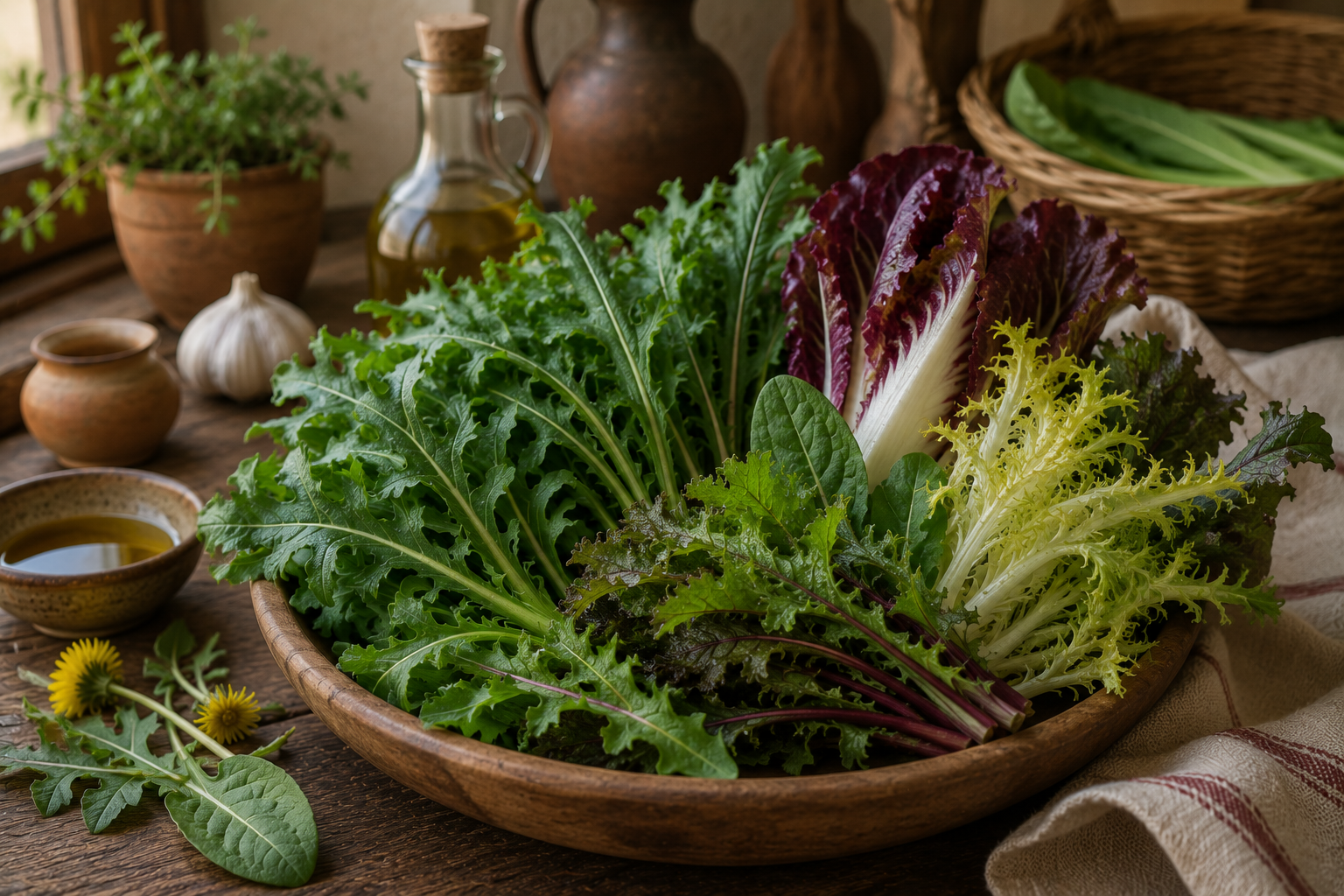
If you’ve ever tasted arugula, dandelion greens, or radicchio, you probably noticed one thing right away.
They’re bitter.
Today, many people avoid bitter foods whenever possible, choosing sweeter flavors instead. But if you look back through history, you’ll find that bitterness was once a normal part of everyday meals.
After spending more than 40 years studying traditional diets, I’ve noticed that nearly every culture regularly included bitter vegetables, herbs, and greens on the dinner table.
These foods were not considered unusual.
They were simply food.
So why did our ancestors eat so many bitter plants, and what can we learn from them today?
Bitter Foods Grew Naturally
Long before modern farming, many of the edible plants people gathered or cultivated had naturally bitter flavors.
Wild greens, herbs, and root vegetables often contained plant compounds that gave them their distinctive taste.
Rather than trying to eliminate bitterness, people learned how to prepare these foods in delicious ways by combining them with healthy fats, herbs, spices, or gentle cooking methods.
Bitterness became a familiar flavor instead of something to avoid.
Meals Included More Variety
Traditional diets rarely centered on just a handful of vegetables.
Families ate whatever was available throughout the seasons.
That often included foods such as:
- Dandelion greens
- Chicory
- Arugula
- Mustard greens
- Endive
- Radicchio
- Turnip greens
Each brought its own flavor, texture, and nutrients to the table.
Together, they created meals that were far more diverse than many modern diets.
Bitter Doesn’t Mean Bad
One of the greatest misconceptions today is that bitterness is something to fear.
In reality, many nutritious vegetables naturally have a slightly bitter taste.
These foods often provide fiber, vitamins, minerals, and a wide variety of naturally occurring plant compounds that researchers continue to study for their role in overall health.
Learning to appreciate a wider range of flavors may also encourage us to eat more vegetables.
Traditional Cooking Softened the Flavor
Our ancestors rarely ate bitter greens by themselves.
Instead, they balanced the flavor with simple ingredients.
Olive oil, garlic, onions, beans, lemon juice, and herbs were commonly paired with bitter vegetables.
Cooking methods such as sautéing, roasting, or simmering also helped mellow some of the stronger flavors while preserving the vegetables’ nutritional value.
The goal was not to hide the bitterness completely, but to create a meal where every flavor worked together.
A Healthy Gut Loves Variety
One lesson modern research continues to reinforce is the importance of dietary diversity.
Eating a wide variety of plant foods provides different types of fiber and naturally occurring compounds that help support a healthy gut microbiome.
Bitter vegetables are simply one piece of that larger picture.
Traditional diets naturally included many different colors, flavors, and textures without focusing on any single “superfood.”
Bringing Bitter Foods Back to Your Plate
If you’re not used to bitter vegetables, start slowly.
You might try:
- Mixing arugula with milder salad greens.
- Sautéing dandelion greens with garlic and olive oil.
- Adding chopped radicchio to salads.
- Roasting Brussels sprouts until lightly caramelized.
- Stirring mustard greens into soups or bean dishes.
Over time, many people find that their taste preferences change, making bitter foods more enjoyable.
It’s About Balance
Traditional cultures did not eat bitter foods because they believed they were magical.
They ate them because they were available, nourishing, and part of a balanced way of eating.
Meals also included sweet fruits, hearty grains, legumes, healthy fats, fermented foods, and a wide variety of herbs and vegetables.
No single flavor dominated every meal.
That balance is something worth remembering.
Final Thoughts
One of the greatest lessons our ancestors offer is that healthy eating embraces variety.
They welcomed flavors that many of us rarely experience today, including bitterness.
By regularly eating greens like dandelion, chicory, arugula, mustard greens, and other seasonal vegetables, they naturally added more fiber and plant diversity to their diets.
Modern science continues to highlight the value of eating a wide range of plant foods, and bitter vegetables deserve a place among them.
Sometimes expanding our palate is one of the simplest ways to expand our nutrition as well.
The next time you encounter a slightly bitter vegetable, remember that you are tasting a flavor that has nourished people for thousands of years.
Leave a Reply